Learn English from Scratch: A Beginner’s Guide
Learn English from scratch step by step: letters and sounds, your first 300 words, grammar, a 30-day plan and English for children by age, with a free PDF.
Have you started English several times and stopped after a few weeks? The problem is rarely your ability; it is the lack of order. To learn English from scratch you need a clear plan where each skill builds on the one before: letters and their sounds, then the most common words, then the grammar to build simple sentences, then listening and speaking. If you are a parent, this guide also has a section on teaching English to children by age, and a free printable PDF at the end.
What does learning English from scratch mean?
Learning English from scratch means starting as if you know nothing: the twenty-six letters and their sounds, then the most common words, then the grammar you need to talk about yourself and your daily life. The goal of this first stage is not perfection but level A1: understanding and saying basic phrases with confidence.
English levels: where do you start and where can you get to?
Language ability is measured worldwide with the Common European Framework of Reference for Languages (CEFR), which has six levels. Knowing yours helps you choose the right lessons and track your progress:
Level | What you can do | Guided learning hours (approx.) |
|---|---|---|
A1 Beginner | Understand very simple everyday phrases and introduce yourself | First stage |
A2 Elementary | Communicate in routine situations such as shopping or asking the way | 180–200 |
B1 Intermediate | Get by when travelling and talk about your experiences and plans | 350–400 |
B2 Upper intermediate | Discuss a range of topics with reasonable fluency | 500–600 |
C1 Advanced | Use the language flexibly for study and work | 700–800 |
C2 Proficient | Understand almost everything you hear or read | 1000–1200 |
These hours come from the Cambridge English help centre. They are cumulative from zero and approximate: you may need more or less depending on how intensively you study and how much English you hear outside lessons.
How do you learn English from scratch as a beginner?
Follow these five steps in order and give them 20 to 30 minutes a day. A little every day is far more useful than long hours once a week:
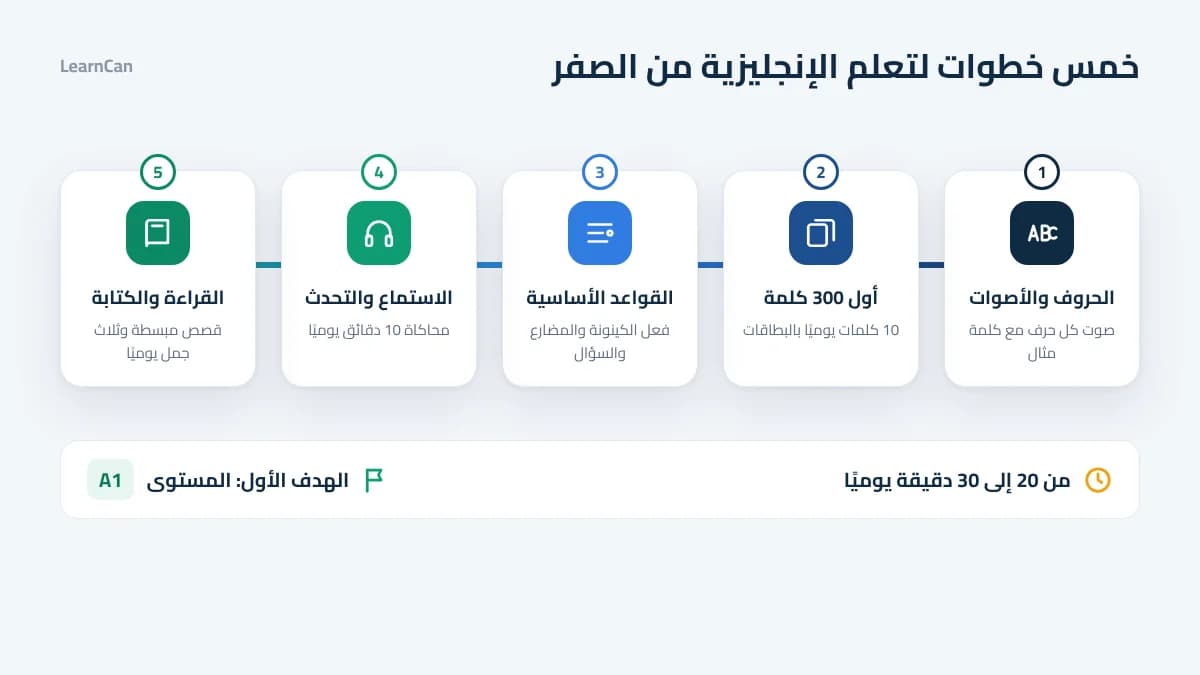
- Letters and sounds: so you can read and pronounce a new word without help.
- Your first 300 words: the words that appear in most of what you hear and read.
- Basic grammar: three rules are enough for your first sentences.
- Listening and speaking every day: with the shadowing technique.
- Simple reading and writing: graded stories and three sentences written every day.
Step 1: letters and sounds (phonics)
English has 26 letters, five of which are vowels: a e i o u. A common mistake is to learn only the names of the letters, while reading depends on their sounds. The letter c, for example, sounds like k in cat and like s in city. Learn the sound of each letter with an example word you remember as a picture:
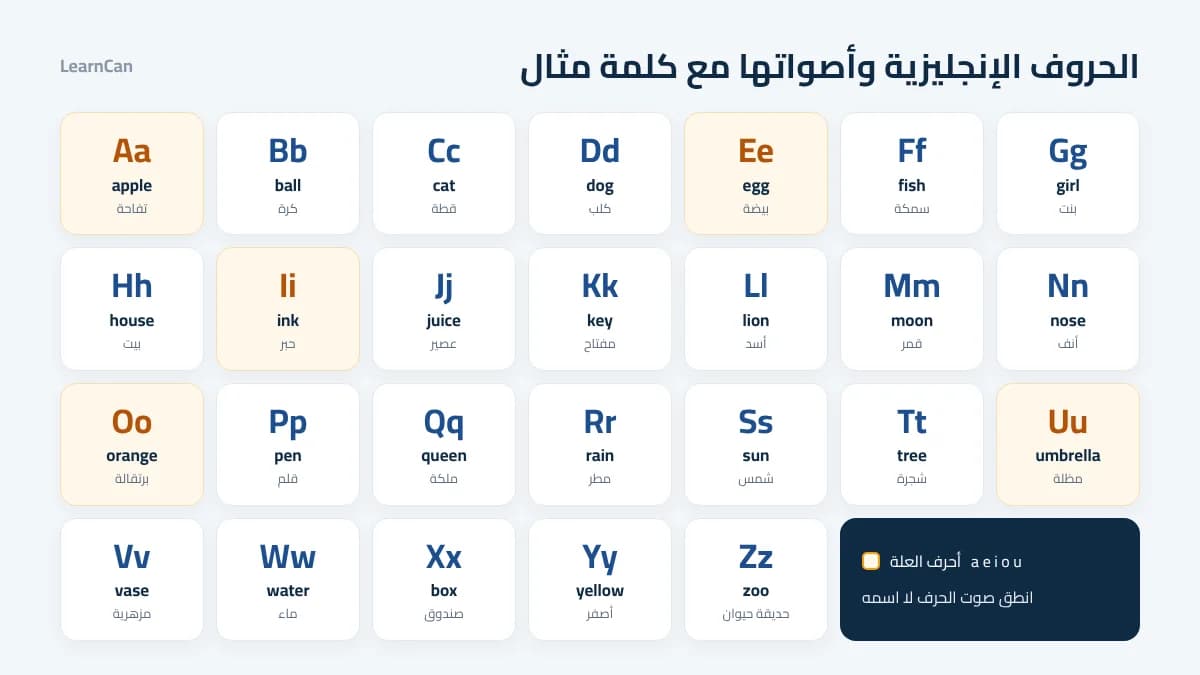
c  →  cat, cup, city
a  →  apple, cat, name
s  →  sun, sit, bus
Listen to each word in a talking dictionary and repeat it out loud. Within a week you will notice that you can read new short words without anyone explaining them.
Step 2: learn your first 300 words
A small number of words make up most everyday speech, so start with them before any rare words. Group them by topic and learn 10 new words a day while reviewing the words from previous days:
Group | Examples |
|---|---|
Greetings | hello, thank you, please, sorry |
Pronouns | I, you, he, she, we, they |
Basic verbs | be, have, go, eat, like, want |
Numbers | one, two, three, ten, twenty |
Time | today, tomorrow, morning, Monday |
Places | home, school, work, shop |
Use flashcards with spaced repetition: a word you know comes back in a few days, and a word you forgot comes back tomorrow. That way words move into long-term memory with the least effort.
Step 3: the basic grammar you need to start
Do not start with a full grammar book. Three rules are enough to talk about yourself and your day: the verb to be, the present simple and questions with do. Here are examples of each:
I am a student.
She is a teacher.
I like coffee.
He likes football.
Do you speak English?
Notice the s added to the verb with he / she / it in the present simple: I like, but He likes. This one rule fixes a large share of beginners’ mistakes.
Step 4: listen and speak every day
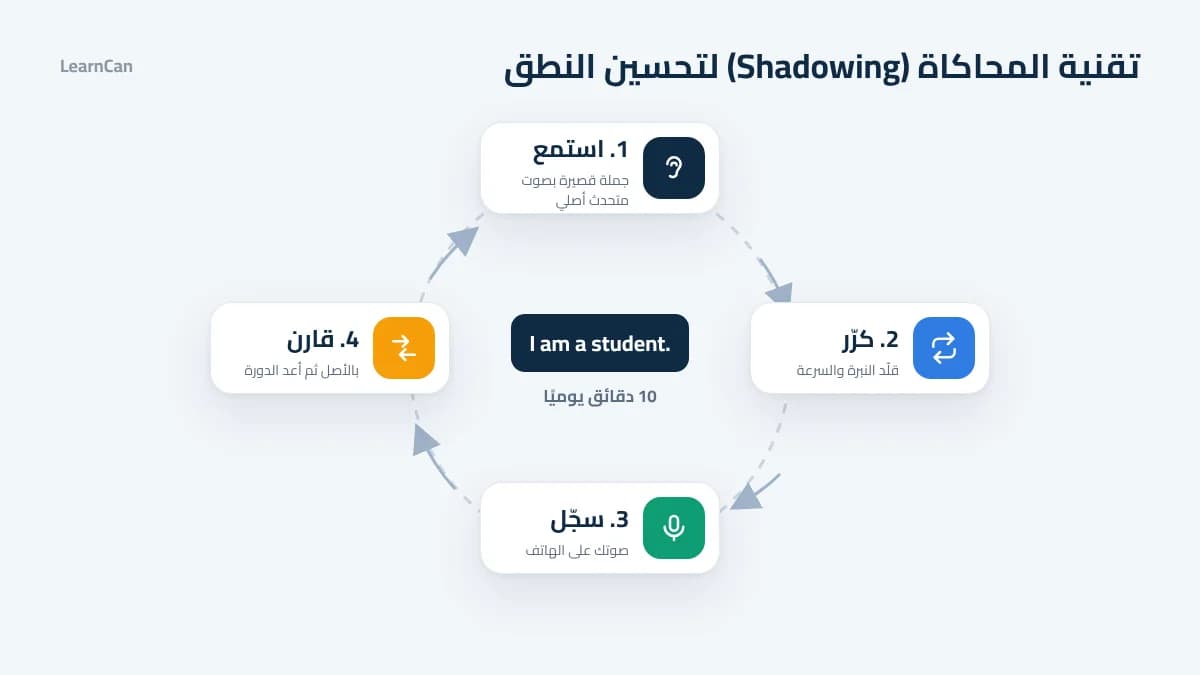
The fastest way to improve your pronunciation is shadowing: listen to a short sentence spoken by a native speaker, pause the recording, then repeat it, copying the tone and speed. Record yourself, compare with the original and repeat the cycle for ten minutes a day.
Do not wait until you are excellent to start speaking. Talk to yourself as you describe what you are doing, or with a friend who is learning too: incomplete sentences at the start are a normal part of learning.
Step 5: simple reading and writing
Read simplified stories written for your level (graded readers) and keep a small diary where you write three sentences every evening about your day. Writing forces you to recall words and rules, so they stick faster than with reading alone.
A 30-day plan for beginners
This plan only needs 20 to 30 minutes a day. You will find it in the free guide, with a table where you tick off each day you complete:
Period | Focus | Daily exercise |
|---|---|---|
Week 1 | Letters and sounds | 5 new letters with an example word for each |
Week 2 | Greetings and numbers | 10 new words and flashcard review |
Week 3 | to be and the present simple | 5 sentences about yourself and your family |
Week 4 | Listening and speaking | 10 minutes of shadowing and a voice recording |
English for children from scratch: a parents’ guide by age
Children do not learn a language the way adults do; they pick it up through play, repetition and links to daily life. So the right foundation starts with listening and speaking, then letters and their sounds, then reading. Choose activities that suit your child’s age:
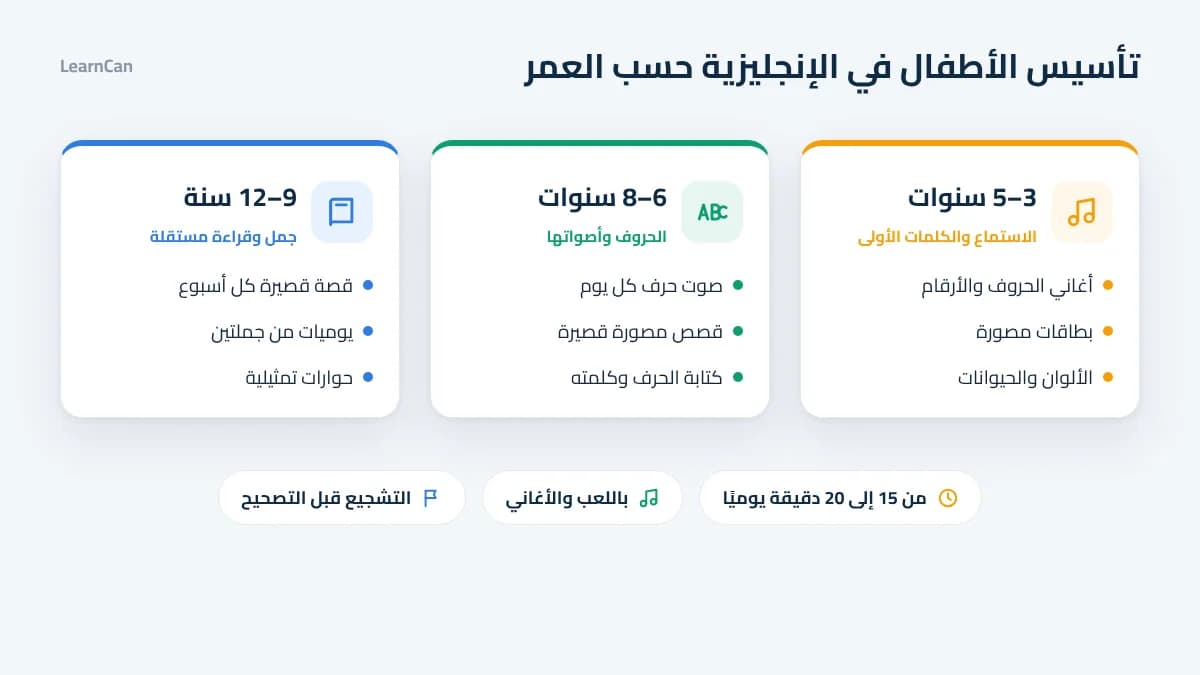
Age | What they learn | Suggested activities |
|---|---|---|
3–5 years | Listening and first words | Songs, picture cards, names of colours and animals |
6–8 years | Letters, their sounds and reading short words | Sound games, picture stories, writing letters |
9–12 years | Simple sentences and independent reading | Short stories, a two-sentence diary, role-play dialogues |
- A short session every day: 15 to 20 minutes at a fixed time beats an hour at the weekend.
- Bring English into the routine: count the stairs in English, name colours while getting dressed.
- Encourage rather than correct every mistake: confidence first, accuracy comes with time.
- An English corner at home: cards and picture books within your child’s reach.
Watch screen time: the World Health Organization recommends no more than one hour of sedentary screen time a day for children aged 2 to 4, less being better, and no screens before that age (see the WHO recommendations). Make songs and stories a shared activity you do together, not a video your child watches alone.
Where can you find free English resources?
- BBC Learning English: free lessons for every level, in video and audio.
- British Council LearnEnglish Kids: free songs, stories and games for children on the LearnEnglish Kids website.
- Flashcard apps: to review vocabulary with spaced repetition.
- [LearnCan courses](/en/courses): practical content to build your skills.
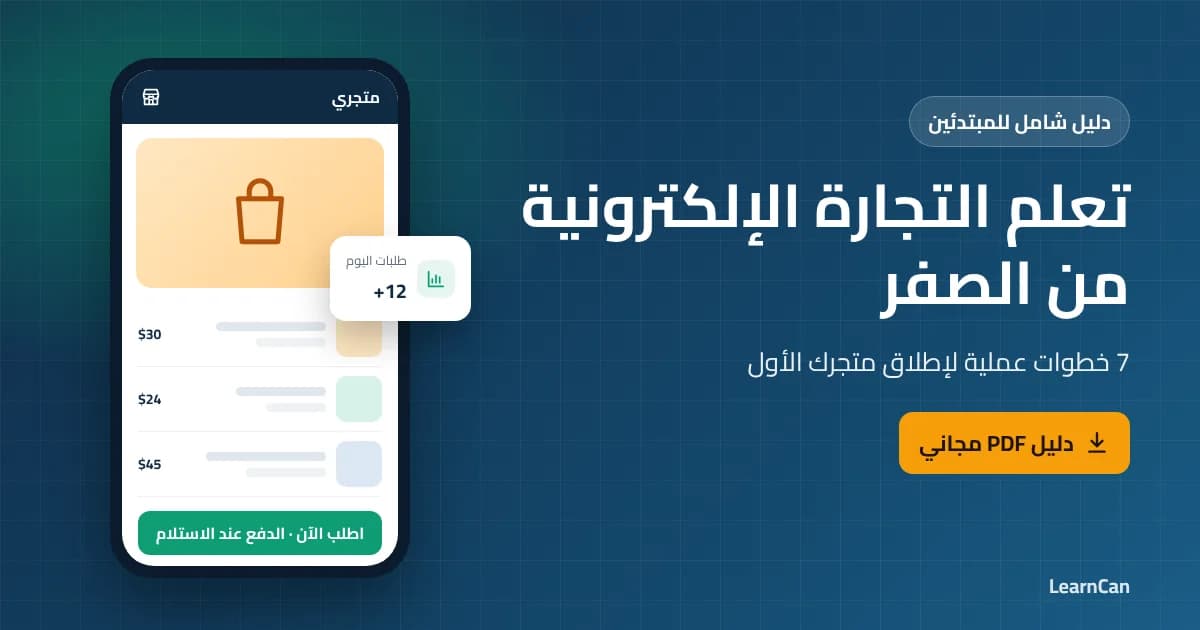
Download the free beginner’s English guide (PDF)
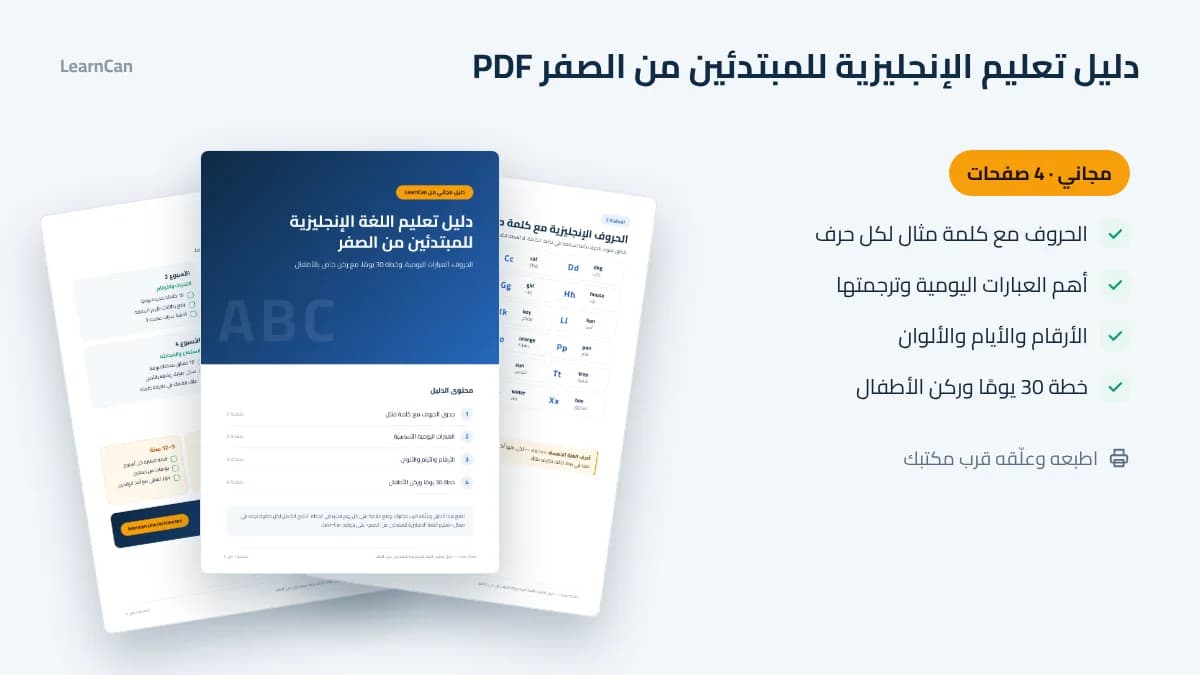
We have gathered the basics of this article in a four-page printable PDF (in Arabic): the letter chart with an example word for each letter, everyday phrases, numbers, days and colours, and a 30-day plan with a children’s corner. Download the free PDF guide here.
Common mistakes that slow you down
- Memorising word lists without sentences: learn every word inside a short sentence you actually use.
- Being afraid of mistakes: someone who never makes a mistake when speaking does not speak at all.
- Translating word for word from your own language: learn phrases the way native speakers say them.
- Jumping between ten resources: pick one main source and stick with it for a whole month.
Frequently asked questions about learning English from scratch
How long does it take to speak English?
With 30 minutes a day you can build simple sentences and introduce yourself within one to two months. Level A2 takes around 180 to 200 hours of guided learning according to Cambridge English, which means several months of commitment.
Can I learn English on my own?
Yes, free resources are enough to build the basics. But conversation needs another person, so look for a study partner or a conversation group as soon as you can form your first sentences.
What is the right age to start English with a child?
You can start early, at around age 3, with songs and words, as long as learning feels like play rather than lessons. Letters and their sounds usually come between ages 6 and 8, alongside learning to read.
Summary
To learn English from scratch is not a race but a small daily habit: letters and sounds, then words, then sentences, then conversation. Start today with five letters and ten words, and print the free guide to track your progress day by day. To keep learning, browse the latest articles on LearnCan.