Dropshipping for Beginners: Start From Scratch in 2026
Dropshipping for beginners: how it works, how to choose a product and supplier, calculate your real profit and open a free store with cash on delivery today.
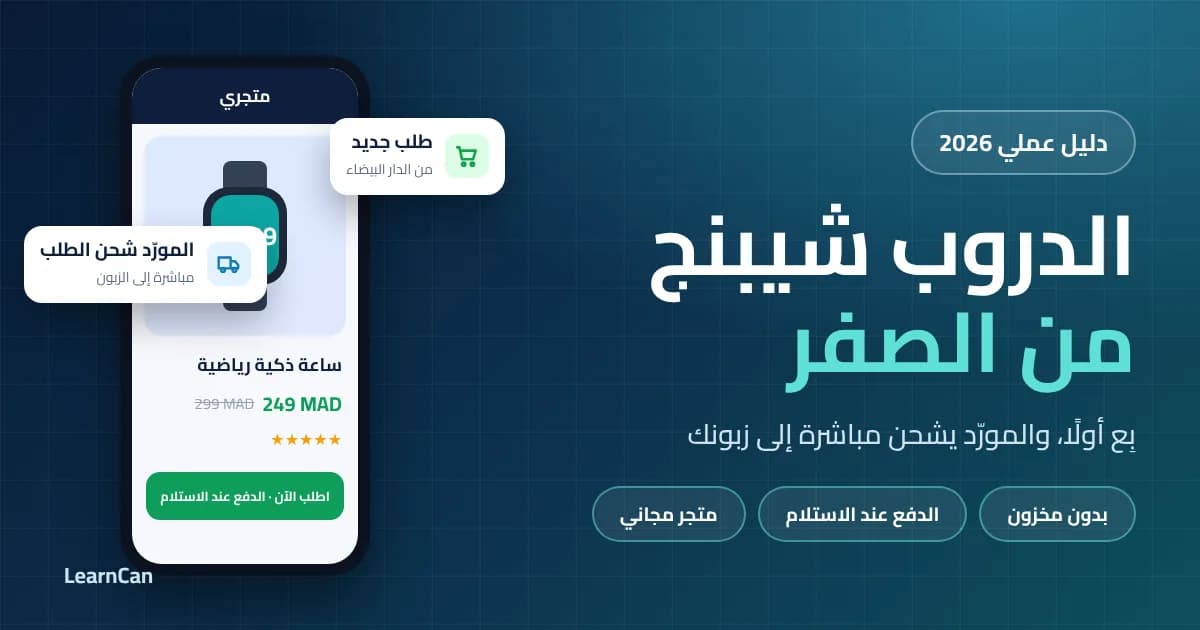
Want to start an online business without buying a single item or renting a warehouse? That is the promise of dropshipping: you sell the product first, then the supplier ships it straight to your customer. This guide to dropshipping for beginners explains the model as it really is, with no get-rich-quick promises: how it works, how to choose your product and supplier, how to calculate your real profit before you spend anything on ads, and how to open your store for free with cash on delivery.
What is dropshipping?
Dropshipping is an ecommerce model where you sell products you do not keep in stock. When a customer orders from your store, you pass the order to the supplier, who packs it and ships it directly to the customer. Your profit is the difference between your selling price and the cost of the product, delivery and advertising.
This is the definition used by the major ecommerce platforms, as in Shopify’s guide to dropshipping. The idea is simple, but success takes careful numbers and patience while you test.
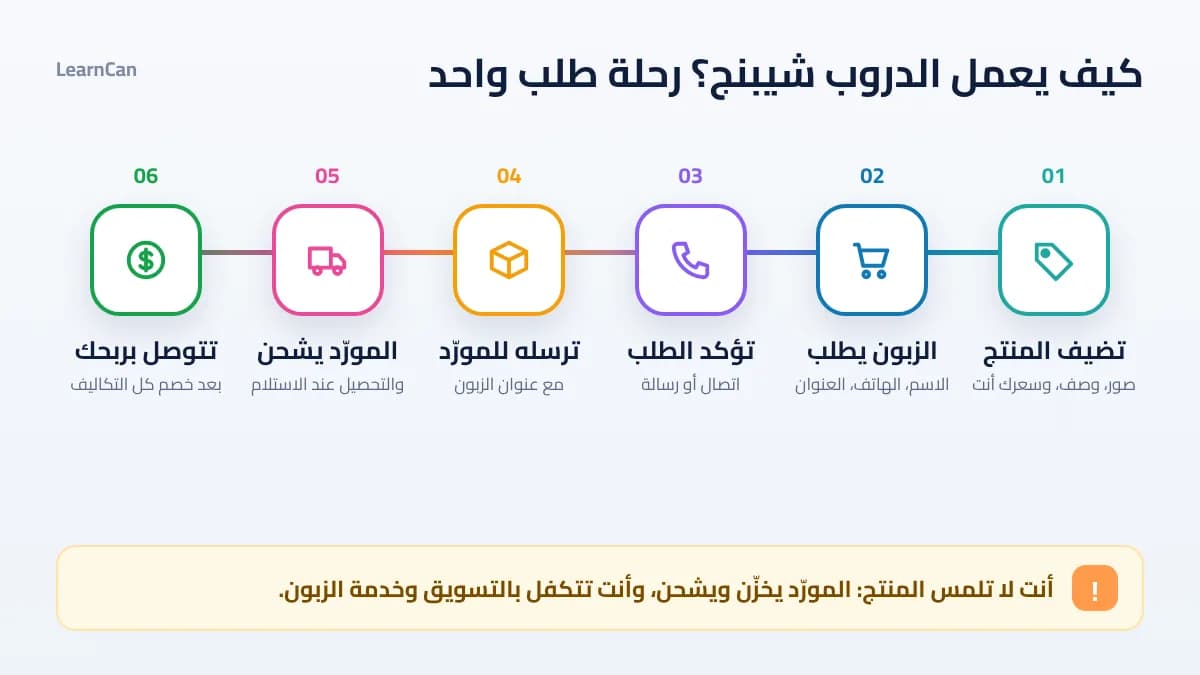
How does dropshipping work, step by step?
- You add the product to your store: photos, description and a selling price you set yourself.
- The customer orders: they leave their name, phone and address, and choose cash on delivery.
- You confirm the order: with a call or a message, to avoid fake orders.
- You send the order to the supplier: with the customer’s address, and pay for the product (or it is deducted from the cash collected).
- The supplier packs and ships: through the delivery company, which collects the payment from the customer.
- You receive your profit: after the product and delivery costs; tracking and customer service remain your job.
Pros and cons before you start
The biggest advantage is the small capital: no stock, no warehouse, and you can test a new product within days, from your phone. But the model has drawbacks you should know from day one:
- Thinner margins: competition is fierce because entry is easy; Shopify’s guide puts typical net margins at only 15% to 25%.
- Less control over quality: you never see the product before your customer does, so always order a sample.
- You are accountable to the customer: a delay or a defect may be the supplier’s fault, but the customer holds you responsible.
- Returns: with cash on delivery, some parcels are refused at the door, and that cost has to be planned for.
Dropshipping for beginners: 7 steps to launch your business
This is the method we recommend to beginners: few steps, a small budget, and decisions based on numbers rather than excitement.
1. Pick a niche and a single product
Do not start with a hundred products. Pick one that solves a clear problem, is easy to show in a short video and sells at a price that leaves a decent margin. You will find the criteria of a winning product and practical examples in our article on profitable ecommerce products.
2. Choose your supplier: local or international?
This decision changes everything: delivery time, return rate and customer trust. For a beginner selling with cash on delivery, a local supplier who keeps the product in stock in the country is often the safest choice, even if it costs a little more.
Criterion | Local supplier | International supplier |
|---|---|---|
Delivery time | 1 to 3 days | 1 to 3 weeks |
Cash on delivery | Usually available | Rare |
Product price | Slightly higher | Cheaper |
Return rate | Lower | Higher because of the wait |
Quality control | Easy: you can see the product | Hard: order a sample |
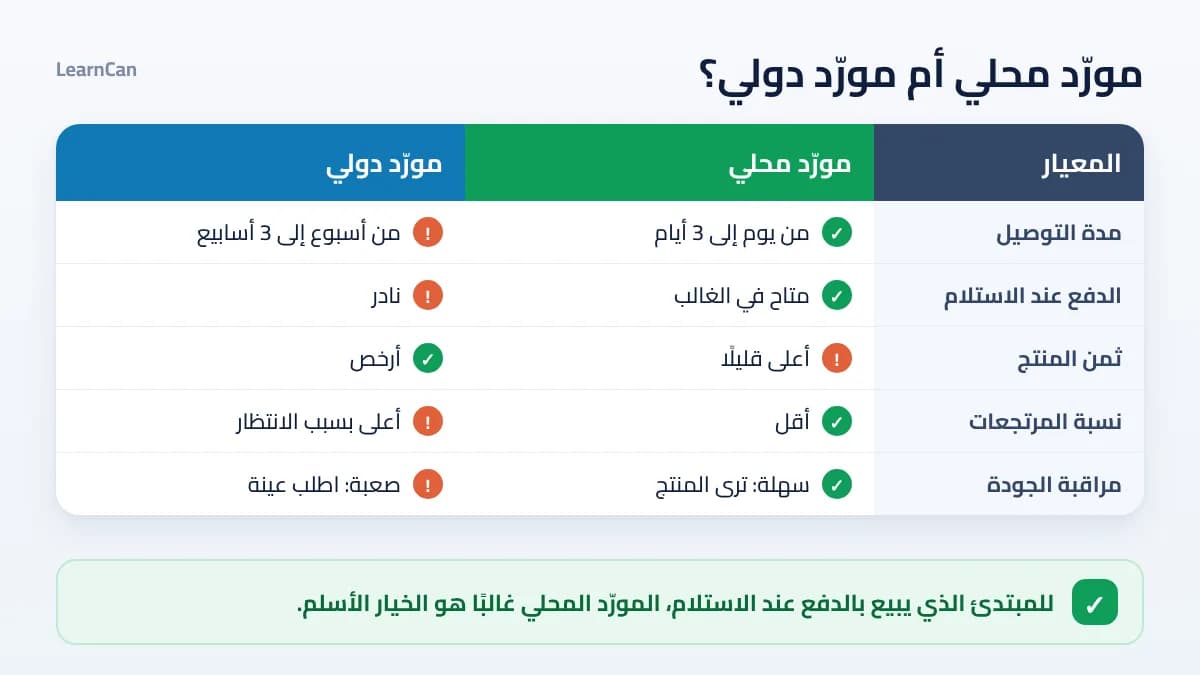
Before you agree with any supplier, order a sample and ask about preparation time, how returns are handled and whether the parcel can carry your store’s name.
3. Calculate your real profit before you sell
The mistake that sinks most beginners: calculating profit by subtracting only the product cost from the selling price. Real profit comes after delivery, advertising and returns. Here is a hypothetical example for a product sold at 249 dirhams:
Item | Amount |
|---|---|
Selling price | 249 MAD |
Product cost from the supplier | − 80 MAD |
Delivery | − 35 MAD |
Advertising per order | − 60 MAD |
Returns and packaging reserve | − 24 MAD |
Net profit | ≈ 50 MAD |
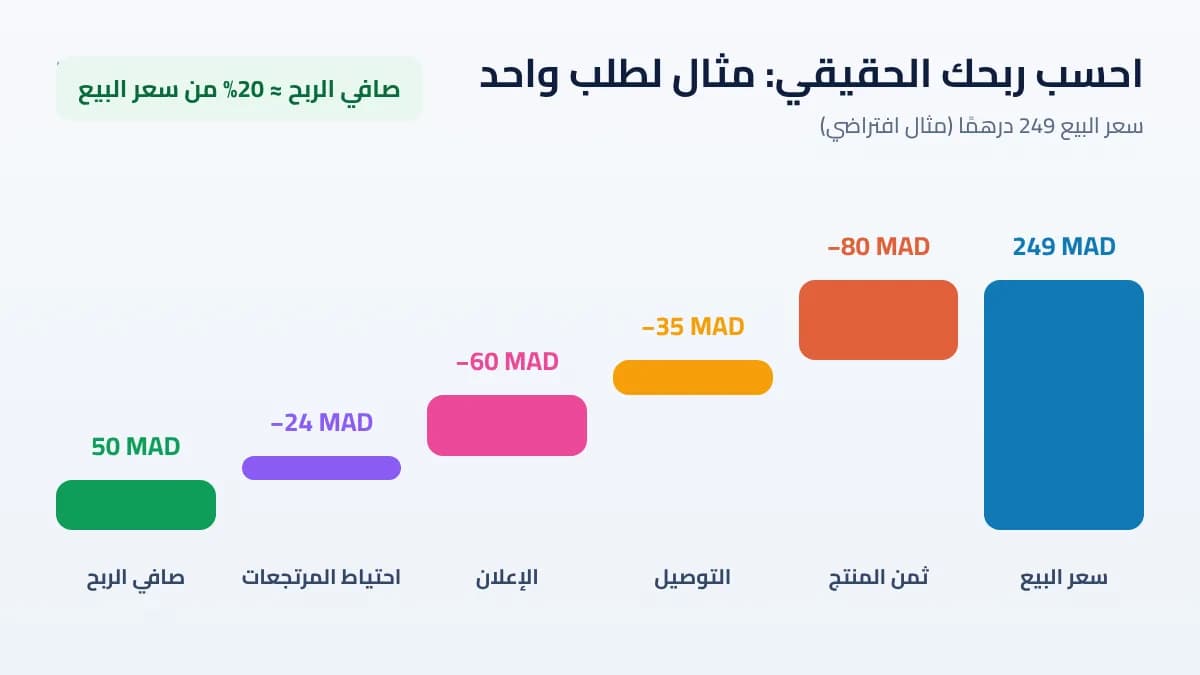
If net profit is below 20% of the selling price, raise the price, add value (a gift, a two-piece offer) or look for another product. To go further, read our ecommerce for beginners guide.
4. Create your store for free
You do not need a monthly subscription to start. On LearnCan you can create your store for free in minutes: no commission on sales, no subscription, no product limit, with cash on delivery. Each product page has a “purchase price” field and costs, and the platform shows your profit per item before you even publish it. Follow the steps in our article on how to create a free online store in 5 minutes.
5. Build a product page that converts
- Sharp photos from several angles and a short video of the product in use.
- A title that leads with the benefit, and a short bullet-point description.
- A clear price, cash on delivery clearly shown and the delivery time stated.
- A guarantee or a simple return policy to build trust.
6. Run a test campaign on a small budget
Set aside an amount you can afford to lose, and test the product with two or three videos on TikTok, Facebook or Instagram for a few days. Decide in advance when you will stop: for example, if the cost per order exceeds your margin after a reasonable number of orders. Do not judge a product in one day, and do not keep funding a losing product out of hope.
7. Confirm orders and track deliveries and returns
With cash on delivery, confirming each order by phone before shipping protects you from fake orders. Industry reports put the return-to-origin rate in the MENA region at 20% to 40%. Track every order, call the customer before the courier arrives, and build returns into your price.
How much money do you need to start dropshipping?
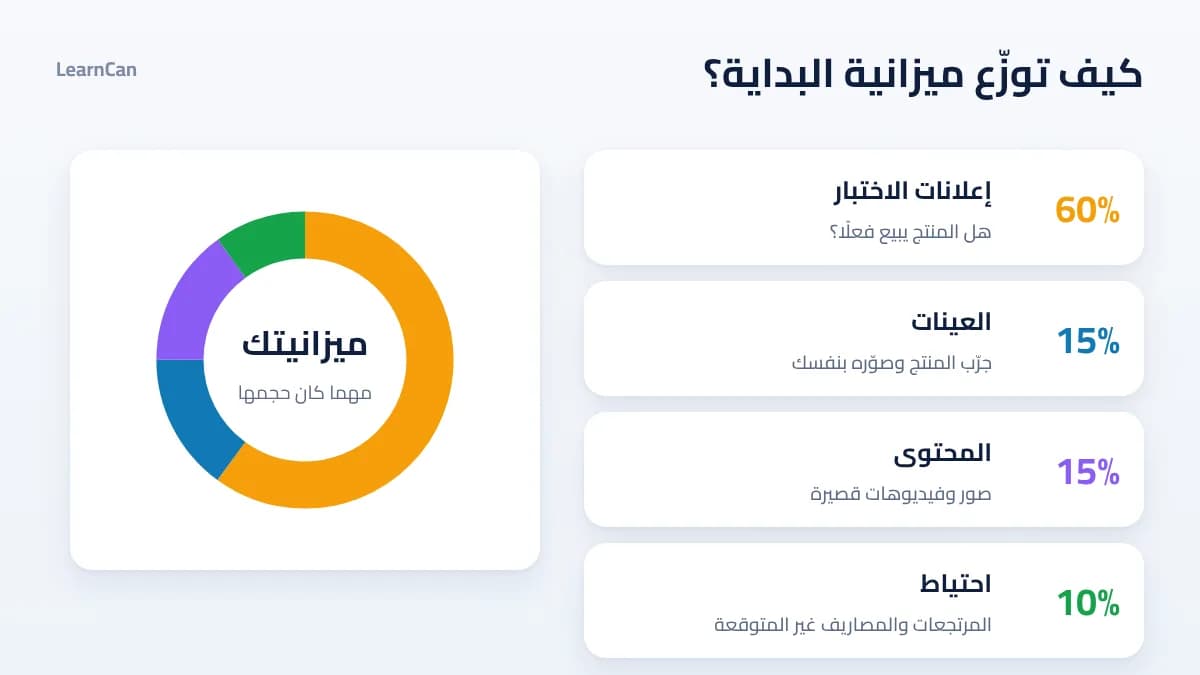
The store itself can be free: most of your budget goes into testing. Split your starting budget roughly like this, whatever its size:
- 60% for test ads: to find out whether the product really sells.
- 15% for samples: to try and photograph the product yourself.
- 15% for content: photos and short videos.
- 10% reserve: for returns and unexpected costs.
Do you need a legal status in Morocco?
In Morocco, the self-employed (auto-entrepreneur) status is the simplest way to start: registration is free on the official auto-entrepreneur portal, the 2026 turnover ceiling for selling goods is 500,000 dirhams a year, with a tax of just 0.5% of turnover on sales activities. Check the current conditions with the official bodies; in another country, ask the relevant administration.
Common beginner mistakes in dropshipping
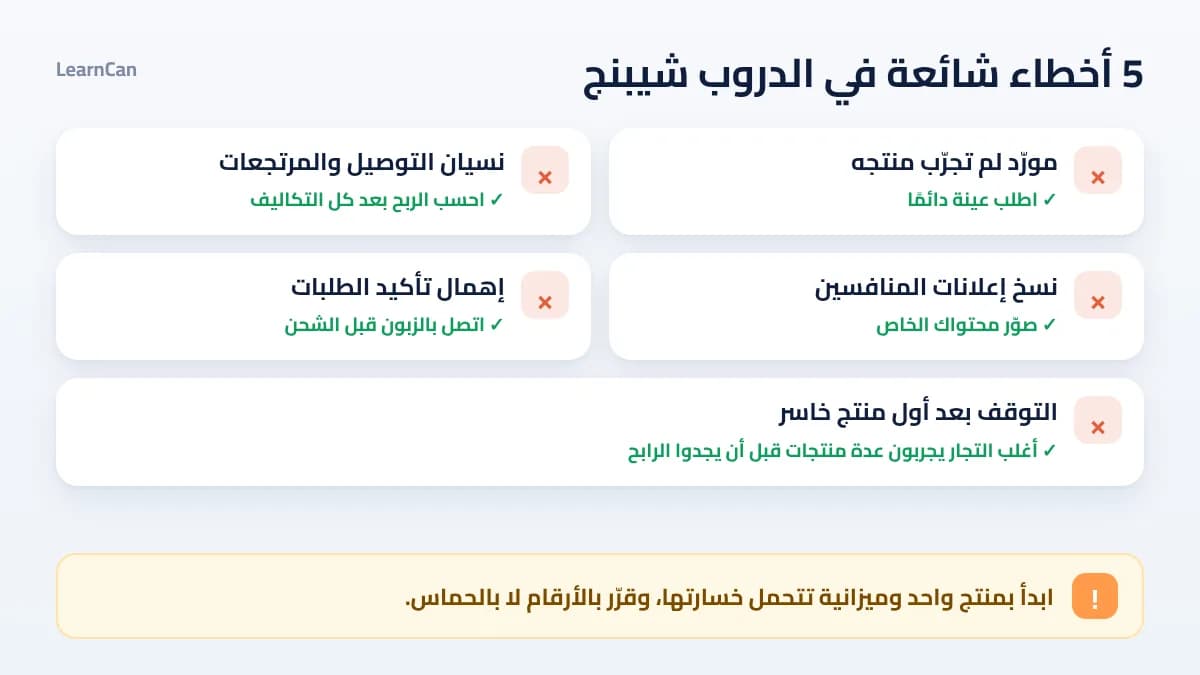
- Working with a supplier without testing their product: always order a sample.
- Forgetting delivery and returns in your numbers: you sell a lot and still lose money.
- Copying competitors’ ads: shoot your own content and make a different offer.
- Skipping order confirmation: returns climb and delivery fees pile up.
- Quitting after the first losing product: most sellers test several products before finding a winner.
Frequently asked questions
Can you start dropshipping with no money?
You can create the store for free, but ads and samples need a small budget. You can also start with free content on TikTok and Instagram, but results will be slower.
Is dropshipping legal?
Yes, it is a legal business model as long as you follow your country’s rules: a declared status, accurate product information and respect for consumer rights, especially on returns.
When will I make my first profit?
The first orders can come in the first few days if the product is good, but steady profit usually takes several weeks or months of testing and improvement.
The bottom line
Starting dropshipping from scratch is neither easy nor fast, but it is less risky than buying a whole stock: one product, a reliable supplier, profit calculated after every cost, and a small-budget test. Open your free online store with no fees, try a store built with AI, and keep learning with our free online courses and LearnCan courses.