
Profitable Ecommerce Products: 10 Ideas and How to Choose
Discover 10 profitable ecommerce products for 2026, the criteria of a winning product, how to calculate your margin and how to test it before you invest.

Everyone who starts an online store asks the same question: what should I sell? The answer decides half of your success before you write your first ad. In this guide we present profitable ecommerce products for 2026, but we won’t stop at a ready-made list that everyone copies: we explain the criteria that make a product a winner, how to calculate your real profit and how to test an idea on a small budget before risking your capital.
What makes a product profitable in ecommerce?
A profitable product is not necessarily the best seller: it is the one that leaves you a net profit after every expense, meaning the purchase price, packaging, shipping, advertising and orders refused on delivery. You can sell a hundred units of a cheap product and keep nothing, or thirty units of another and make a solid profit.
So we look at three numbers together: the margin per order, the demand in the market and the cost of acquiring a customer. A product that combines all three is what sellers call a “winning product”.
7 criteria for choosing profitable ecommerce products
Before you look at any list, remember these criteria: you will use them to judge every idea you come across.
- It solves a clear problem: people happily pay to remove a daily annoyance or save time.
- The wow factor: a product understood in three seconds of video that makes viewers say “I want this”.
- Enough margin: the selling price is at least three times the product cost, to cover ads and shipping.
- Easy to ship: light, small and unbreakable; every breakage means a return and an unhappy customer.
- Hard to find in stores: if customers can buy it around the corner for half the price, they won’t order from you.
- Steady demand: it sells all year, not a trend that dies after two weeks.
- Safe and legal: no counterfeit brands, no medical claims, nothing banned in your country.

How do you calculate your margin before selling?
This is the step most beginners skip, only to discover a month later that they were selling at a loss. Take a product bought for 6 dollars and sold for 39 dollars with cash on delivery:
Item | Amount | Note |
|---|---|---|
Selling price | 39 dollars | What the customer pays |
Product cost | 6 dollars | Supplier price |
Packaging | 1 dollar | Box and label |
Shipping | 4 dollars | Depends on the city |
Advertising per order | 8 dollars | Average cost of one order |
Refusal allowance | 2 dollars | Orders refused on delivery |
Net profit | 18 dollars | About 46% of the selling price |
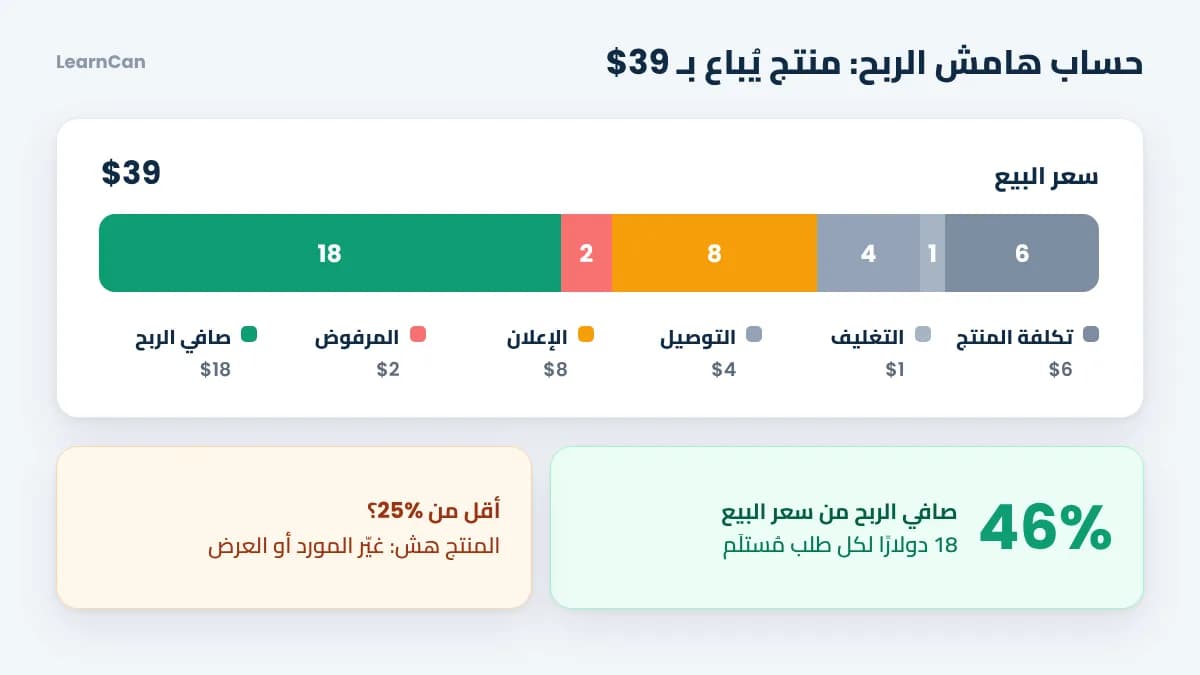
The simple rule: if net profit is below 25% of the selling price, the product is fragile; any small rise in ad costs will turn it into a loss. Find a cheaper supplier, raise the perceived value with a “two for a special price” offer, or drop the product.
10 profitable ecommerce products to sell in 2026
These categories sell steadily in online stores, with product examples in each. Pick a category whose audience you understand, then apply the criteria above before making any decision.

1. Phone accessories
Nobody goes anywhere without a phone, so demand for accessories never stops: trendy cases, fast chargers, wireless earbuds, power banks and car mounts. Low cost, easy shipping, and you can raise the average order with a “case + screen protector + cable” bundle.

2. Skincare and beauty
Serums, moisturizers, sunscreen and makeup tools are bought regularly and run out, so customers come back. Focus on one product that solves a specific problem, such as dry skin or dark circles, with a reliable supplier and clearly listed ingredients.
3. Natural and local products
Raw honey, argan oil, rose water and herbs carry a sense of authenticity, and you can build a real brand around the product’s story and origin. Competition here is about quality and trust, not the lowest price.

4. Smart kitchen and home
Cabinet organizers, quick chopping tools, vacuum storage bags and smart lighting are products that “explain themselves” in a short video. Look for the tool that saves time on a chore everybody hates.
5. Pet supplies
Cat and dog owners spend generously on their pets’ comfort: hair-removal brushes, water fountains, toys and beds. An emotional, loyal audience that often buys again.
6. Home fitness
Resistance bands, yoga mats, massage rollers and marked water bottles suit people who train at home. Light, unbreakable products that sell well at the start of the year and before summer.
7. Baby and mom products
Mothers look for anything that makes the day easier: organizer bags, feeding accessories, educational toys. This category is profitable but sensitive: only sell products with clear safety standards and avoid anything that goes in the mouth without certification.
8. Fashion and accessories
Watches, sunglasses, bags and practical clothing such as comfortable sets deliver good margins. The challenge is sizing: reduce returns with an accurate size chart, or start with one-size accessories.
9. Digital products
Courses, templates, e-books and design files are the most profitable of all: no stock, no shipping, no returns, and one creation can sell thousands of times. If you have a skill, turn it into a digital product or publish your course on LearnCan.
10. Personalized gifts
Mugs, T-shirts and frames printed with a name or photo sell for more because they are unique, and demand peaks during holidays. Print on demand lets you start without any inventory.
Where can you find winning products before your competitors?
Don’t rely on gut feeling alone; these are free sources professional sellers use every day:
- Meta Ad Library: search the product in the Ad Library and follow ads that run for weeks; an unprofitable ad stops quickly.
- TikTok and Instagram: videos full of “how much?” and “how do I order?” comments are a real demand signal.
- Google Trends: open Google Trends to see whether interest is rising or falling in your country.
- Best-seller lists: on large marketplaces and local sites, read the negative reviews to find what the current product is missing.
- People’s questions: groups and forums where people complain about a problem; every repeated complaint is a product idea.
How do you test a product before investing?
Even the best sellers don’t know in advance which product will win; the difference is that they test fast and on a limited budget. Follow these three steps:
- Build a strong product page: clear photos, a short video, benefits rather than specs, and a precise price and offer.
- Set a small test budget: an amount you can afford to lose, spread over two or three days and two different videos.
- Decide with numbers: cost per order, confirmation rate and delivery rate. If cost per order is below half your margin, keep going; otherwise adjust the offer or move to the next product.

You don’t need an expensive website to test: you can create your online store for free on LearnCan and offer your product with cash on delivery in minutes.
Common mistakes when choosing products
- Chasing a late trend: when everyone sells the same product, prices fall and ad costs rise.
- Selling counterfeit brands: it can get your ad accounts closed and lead to legal trouble.
- Ignoring refused orders: with cash on delivery, your profit only counts delivered orders.
- Sticking to one product forever: every winning product wears out; always prepare the next one.
- Heavy or fragile products: high shipping costs and returns eat your margin.
FAQ about profitable products
What is the most profitable product in ecommerce?
There is no single winning product for everyone. The most profitable one fits your audience and meets the seven criteria. Digital products usually have the highest margin, followed by beauty products and phone accessories.
Is dropshipping still profitable in 2026?
Yes, as long as you choose a fast, reliable supplier and care about the customer experience. Competition is stronger than before, so the difference now lies in product page quality, delivery speed and after-sales service.
How much capital do I need to sell a winning product?
You can start small if you don’t buy stock in advance, but keep a budget for testing ads, the biggest expense at the beginning. If you are just starting, read our guide to ecommerce for beginners to understand the basics and the budget.
How do I know a product is saturated?
If cost per order keeps rising despite fresh videos, and more and more stores sell it cheaper, the product has reached saturation. Differentiate your offer with a gift or a guarantee, or move to an improved version.
Conclusion
Choosing profitable ecommerce products is not luck, it is a method: clear criteria, an honest profit calculation and a fast, numbers-driven test. Pick one of the ten categories, score three products against the seven criteria, test the best one this week, then follow the plan to learn e-commerce from scratch and launch your store step by step.